Monday, 10 June 2013

Finding Faults

Finding Faults 
 
Beatles - yer blues
RECORDING
The mix is poorly done as the levels are not balanced well, also the panning of the instruments such as the 3electric guitar, it sounded very far away.
At the beginning of the piece, The bass guitar is very loud and overpowering, it cancels out the vocals. The strings on the bass were plucked to hard which gave a very trebbley sound which sounded uneasy on the ear.

PERFORMANCE
The bass drum is almost none existent as it is very faint and not prominent, this is due to the lack of mic'ing up the kit correctly or having the microphone a long distance away from the bass drum.
There are numerous aspects of the drum which can be improved, the faint bass drum, the unclean ride symbol and the snare drum which is loose and has reverb on it, creating a very rough sound.

The Guitar was constantly giving feedback as you can hear in the recording, this could have been easily erased and gated off on a recording software yet is was left in the recording.

 
love - you set the scene
PERFORMANCE
Due to the guitar being acoustic and slightly out of tune, the steel strings clash against the wooden fret, creating a rustic uneven strum pattern. The acoustic guitar was recorded with of a microphone instead of a pre-amp or interface for an acoustic sound. you can hear the high frequencies on the acoustic guitar instead of the whole mid, high and low frequencies.
  
RECORDING
The balance is very uneven, the bass guitar is panned to the right and the acoustic guitar is panned to the left, simultaneously its is very dissonant on the ear, this can be solved my mixing and balancing them so they levelled creating an even sound. The vocalist tone was very mellow and seemed to not be trying very much

As a whole the mixing was just terrible it was very mono tone, everything was on one level and too compressed to have any dimension
 
 
weird war - I live in a dream

PERFORMANCE
The guitar which is playing an octave higher from the other guitar is very painful to hear is it has played the incorrect notes on numerous of occasions, this could be improved if the musician leaned the parts and tuned the instrument.
 
 
RECORDING
The vocals are very quiet is has been drowned out by the instruments. This can be fixed by turning down the instruments or turning up the microphone on the vocals.

There is alot of reverb on the vocals, the lead vocals is unclear as the reverb has muffled the words making them indistinguishable, also I suggest a better microphone to pick up the different ranges of his vocals.

Drum kit is mic'd up well but is mixed too loud, the high hat ,Symbols and bass is so prominent.


Friday, 7 June 2013

Unit 16 Music & society: Event accounts

Music in society: Event accounts

The summer gig consisted of 4 sets during a 2 day period. As a team we were knowledgeable of the summer gig and all the preparation needed. We were told we had to plan the event and was allocated roles in which we had to work on as a team and in some cases individually. We held small meetings months in advanced to prepare for the gig, choosing songs for the set and rehearsing them in lesson and in our spare time. We decided on the dress code and the order of the set list. We all agreed on a name for the show, which was 'Signed'. These little meetings were really pivotal as they built the foundations therefore we could work from them to deliver a great gig. We were assisted by the L3 production class, which did the sound engineering.
 
Planning

The roles involved in order for the gig to successful are as followed.

The Sound engineers (level 3 music production)  they handled the technical side of things,they were being assessed so we had to be patient. In preparation for the gig, the engineers had to set up all the equipment, all the hardware, including the microphones, mixing and balancing them to get them ready for the musicians and the artists. There were many sound checks as each song had to be balanced. I thought they did a great job as the sound side of things sounded great and they were very helpful as a team.
The Artists/Musicians (Paige, amber,Bea, Sinai, Daniella, Shevelle, John, Josh, Roy and I ) we were responsible for delivering a great performance. In preparation We were constantly rehearsing the set, also the musicians had to practise their instruments. 
However we took it in our stride and we delivered a great performance.
The Stage managers (Josh and Shevelle) made sure people know where they are supposed to be on the stage at the appropriate times, reassuring them of their tasks.

The Bartenders (Amber, Sinai, Roy) they served the drinks , alcoholic and also non-alcoholic throughout the the night. The bar got Busy during the interval as there was a large sum of people wanting beverages so we were constantly having to restock. This is a very tedious job but was made easier as they didn't have to handle the money side of things. They could accepted the tokes Which was purchased for the box office in exchange of a drink.
The Visuals/Lighting engineers (Christina, Sinai and john) Sinai and I were responsible for asking class members what visuals the wanted for their songs. Weeks before the Gig as a team Sinai and I sat down and individually asked each artist what lighting, smoke machine, props and backdrop they desired. We explained the choices of colour and spotlight options, after discussing this with them. I uploaded the information to the blog where Chloe passed it on to the visuals planner and magic was made.
http://www.blogger.com/blogger.g?blogID=1430931558441299266#editor/target=post;postID=1627793080723915756;onPublishedMenu=allposts;onClosedMenu=allposts;postNum=11;src=postname

John was in charge of creating the poster, this is a job which required a creative mind. John had a great idea of making us sign our signature on individual pieces of paper and embed it onto the pre-made poster, which creating a beautiful collage of signatures. We put up the posters around the college trying to promote the gig in hope of out fellow student to attend

The Promoters (Roy and Bea) had to promote the gig, getting as many people interested as they can, they did this by shouting about it via social networking sites such as Facebook, Twitter and blogger, we also put up posters around the college, another promotion techniques is to talk to people, spreading the news trough word of mouth to family and friends.
https://www.facebook.com/events/135684696623332/permalink/139843346207467/
 
The Box office workers (Christina, Paige and L3 production) was incharged of selling tickets to the costumers, they also sold drink tokens to the customers so they could get drinks at the bar. Money was involved so we had to pay attention. We recieved a float, a guest list, and drink tiokens and a tally chart as we were to chart the income. Being on the box office was very stressful as a stream of constant customers were gushing in purchasing tickets, Also during the interval there was a large amount of people coming to purchase drink tokens so it was very busy.

The Roadies (Roy, Josh, and I) helped the band unload their vans we also help setup and reload the trucks after the gig. we  had pervious experience setting up equipment so this job was very easy. They were really nice people so it was nice to work with them and get the experience of witnessing how things are set up and how heavy the equipment is.The band really appreciated this help and text our teacher to tell us their appreciation.

The DJ's (Josh and  L3 production) were in charge of setting up the turntables and the mac computer in the spot. they are trained DJ's so good music was expected and they delivered.They supplying the audience with music before, during the interval and after the gig. 

Summary
The set list was constantly upgrading, acts were cut and tensions were high. We all tried our best to deliver a great performance. As a team we all pulled together to put on a great show which was enjoyed by the audience as we received great feedback.

The pros of the gig was the turn out, the promoters did a great job getting people there, putting westkingmusic on the map. Due to them we wear able to profit for the gig. The artists and musicians were excellent performing to the best of their abilities. The Dj's did a great job setting the scene for everyone,as were in a good mind set, audience and performers. The DJ's played in the interlude, the music played a huge part on everyones attitude as people were enjoying themselves which meant purchasing drink tokens which benefited us.

The cons of the gig was the guitars not being in tune, If we were to redo the gig to make it better as a whole i would, buy extra drinks in advanced so that were not constantly running  the corner shop purchasing beer, however we wernt to know the turn out. Also I would hire a musician to tune the guitar after each song.

Due to all the planning  in advanced I felt that the gig was a success a saw how adapted quickly to the different layout of the stage as there was 2 stages, an acoustic stage accommodating the acoustic songs and the main stage were the big live bands performed.  We organised the set list very well as it was like a story from the uplifting 'lockied out of heaven'  at start the gig to the acoustic stage 'Lost soul' and finally the Erase me, an uplifting reggae song. There was a range of genre which made the set enjoyable for the audience and also the performers.


BY Christina Harris


Music & society: The budget

THE BUDGET

Tuesday 21/05/13 (FIRST SHOW)
10 x full price tickets at £6 each - 10 x 6 = £ 60
17 advance tickets at £5 each - 17 x 5 = £ 85
Guest list at free 13 x 0 = £ 00
Students at free 0 x 0 = £ 0
DRINK SALES on Tuesday 21/05/13
33 beer/wine/juice at £1.50 each - 33 x 1.50 = £ 49.50
DEDUCTIONS
Band fees (£60/£40)-£100
Ice, fruit juice- £7
TOTAL AFTER DEDUCTIONS £87.50
 

 Wednesday 22/05/13 (SECOND SHOW)
0 X tickets sold as it was a free show
14 x beer/wine/juice at £1 each
14 x 1 = £14
(sale due to audience was mainly students)
TOTAL SALES  £14

TICKET SALES Thursday 23/05/13 (THIRD SHOW)
36 x full price tickets at £6 each - 36 x 6 = £ 216
7 x advance tickets at £5 each 7 x 5 = £ 35
8 x guest list at £0 each 8 x 0 = £ 0
2 x students at free 2 x 0 = £ 0

36 beer/wine at £1.50 each 36 x 1.50 = £ 54
9 juice at £1 each 9 x 1 = £ 9

OVER ALL TICKETS+DRINKS SALEs £314 
DEDUCTIONS
band fees: £160 (£80 per band) £160
extra bar stock £64.49

PROFIT £89.51
 
TOTAL PROFIT FROM ALL GIGS
£87.50 + £14 + £89.50
TOTAL £191.01
 

Total Bar Epediture over three nights:
Beer: (30 units bought in) 30 x £1 = £30
Wine: (4.67 units bought in) 4.67 x £6.99 = £32.71
Ice: (3 units bought in) 3 x £0.89 = £ 2.67
Fruit Juice: (5 units bought in) 5 x £1.22 =
£ 6.11
Total: £ 71.49
 
The bar was supplied with drinks so there was no need to purchase as there was stock. For the first two nights, the bar stock was already purchese so there is no need for deductions. However, on night 3 we ran out of drinks rappidly. and had to restock. It was defiantly worth having a bar as we made such a huge profit selling the drinks so cheap at £1.50 and £1, we purchased the drinks in bulk was so cheap at £0.33, this means that it is more likely for people to purchase more than one. The bar was very busy (especially in the interval) as people were constantly purchasing drink tokens. I felt that we were meeting the needs of the consumers by supplying drinks at the gig as made a worth while profit at the end. There was a slight problem as we ran out of Drinks on numerous occasions as the customers were purchasing them so often, this was anticipated as the turn out wasgreat and as the drinks were so cheap.
The stock 
(Beer bought) Per Bottle: £0.33
(Beer sold) Per Bottle: £1.50
PROFIT Per Bottle: £1.17
(Wine Bottle) Per Bottle £6.99
(Wine Bottle) Per Cup £1.50

On Tuesday we found that there was more tickets being sold online than at the door, this shows that people are purchasing tickets online more and more so for future reference selling tickets online is the way to go. There was a also a discount being on the guest list and every one loves a discount so people purchased online.

I Think that band fees were fair, as they were a great band and they delivered a great performance and even though it dented the overall sales it was worth it as without their fans we would have sold few little tickets and would probably be bankrupt. 

The audience was aimed at anyone that enjoyed their style of music which was post-rock, experimental, although we did attract some indie, punk rock fans. The lack of student that attended was predicted as student cannot afford to be purchasing gig ticks for £6 full price also they might not understand the music and not be to their taste.

The ticket fees was a £6 which is a bargain, as at a regular gig you would expect to pay more. Also the drinks were cheap so it did make up for the cheap tickets. We could potentially Expand the fan base and more do advertising via social networks to promote the gig. 

After adding up all the expenditures of paying the bands, buying of the drinks, fruits,  out over all profit was  £ 71.49 a figure I cannot argue with.


Thursday, 6 June 2013

UNIT 32: Sequencing Systems And Techniques

UNIT 32: Sequencing Systems And Techniques

As I am a keyboard player I decided to record the piano in real time. 
I wasn't confident enough to play without the click so I used the cursor to activate the click. I then dragged the cursor over the tempo marking and dragged it to my desired tempo which was 130bpm. 

When recording the keyboard in real time with the click I found that I needed to use the quantise button often to make sure things were precise and on the click.

The little shortcuts I used to make the task easier are..

The scissor tool which is located on the top right hand side of the screen.
I also used the alternative method of pressing the (Esc) button which gave me a list to choose from, I then clicked on number 5 on the keyboard to select the scissor tool. I also used the split by region tool to multiple tracks 

The shift key was used as it opened up many doors and when manually inputting motes with the keyboard when a midi keyboard was not available.

The Copy tool was used a lot. I pressed down the (CMD + A) key to copy data and in addition to that (CMD + V) to paste data.

I could easily shorten and lengthen the note duration by dragging the cursor left and right of the note.

I used the compression tool by going into the plug-in section and selecting dynamics and selecting the compression tool and using the cursor to manipulate the sounds.

The velocity tool was used the alter the volume of the notes dragging up and down depending on preference

When adding Channel EQ to the track I used the cursor to select a plug-in + dynamics + selected channel EQ. I then altered the levels by using the cursor.

The glue tool was used to conjoin notes and sections together by pressing (Esc + 6)

The hardware used to create this Track is an iMac which has the logic software version 9.1.7 installed and ready to go, this is connected to a midi keyboard which has sound modulation and pitch blend, is is connected by a standard midi to usb cable.


Wednesday, 5 June 2013

Music Technology in Performance resubmit

The Electric Guitar
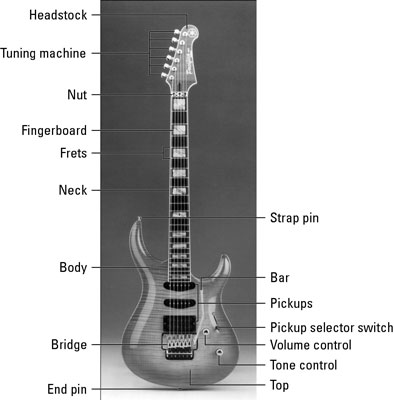
The electric guitar is the core instrument of any band. It comes in all shapes, sizes, colours, materials, pitch and scale length. The guitar is a flexible piece of music technology that can play any genre of music and is manageable and maneuverable, especially in it's solid body form. A guitar uses direct electromagnet induction technology to convert the vibrations from its tightly wounded metal strings to electrical audio signals to create beautiful music. For an electric guitar to be heard it must be plugged into an amplifier via 1/4 inch jack to jack lead. The electric guitar was invented by George beau champ in 1931 and wasn't available for commercial use until 1932.

Developments of The Electric Guitar
image0.jpg
1931: The Rickenbacker “Frying Pan”
1935: The Rickenbacker “Electro String”
1941: Les Paul “Log”1947: Bigsby-Travis Guitar
1948: Fender Broadcaster (Telecaster)
1952: Gibson Les Paul
1954: Fender Stratocaster
1979: Van Halen “Frankenstrat”1982: Jackson Randy Rhoads
1994: Ibanez 7-String Guitar
2008: Guitar Hero Controller


Guitars are valued by the parts they posses such as their pickups, their body, bridge, neck length, quality of the tuning pegs and many more aspects. I will go on to analyze 2 different versions of a pacific part of the guitar, weighting up the pros and the cons.
  

Hollow body vs solid body electric guitars
Some guitarists prefer hollow body guitars as they are lighter and sound more airy and as anaocustic tone to it.  However,  solid body guitars are heavy in weight, they also have a nice strong, whole sound to it. The early electric guitar's body was hollow, to this there were many issues attached to the hollow body guitar there was feedback and unequal volume, this was later fixed by Les Paul who came up with a Solid body in 1940.  Also in 1940 Sidney Wilson then addressed the unequal loudness issue by inventing the first fully electric guitar.  In the 1950's Seth lover invented the humbucker.

Single coil pickups vs humbucker pickups
Pickups capture the sound of the strings,  Guitarist can choose which sound they prefer, the pickups can be easily removed and replaced. The Gibson les paul is famous for their humbucker pickups.  Artists such as Jimmy Hendrix, John lennon and many more use Gibson's because of their quality humbucker Pickups. Its gives a clean sound which is effective in live performances. There has been a big problem with singe coil pickups pick up unwanted electrical noise and have a lighter sound cancel out the electrical hum which can be heard on single coil guitars and therefore allow guitarists to play louder and with more gain without also amplifying the electrical hum which at loud volumes would become very irritating where as humbucker cancels out the noise and provides a fuller sound and allows heavier distortion with less feedback.

Developments in tremolos
Tremolos are small metal objects with holes onside it is a bridge that holds the strings and inotation, they are located at the bottom end of the strings on an electric guitar, they are used for changing the pitch, add vibrato and drive the bomb they make A wavering effect in a musical tone, this is produced by rapid repetition of a variation of a note.

The 1st was the Bigsby trem, it was top mounted and worked by changing the string tension slightly with the arm movement.

The 2nd was the "Vintage"/ Stratocaster trem, this system was built into the inside of the guitar with the springs accessible from the back, when the bar is pressed down it pulls on the springs and loosens the tension, however it only works for down pitching.

The 3rd was the Floyd Rose is a floating trem which is the main system used to change pitch in both directions this was invented in 1977, they are attached at one end to the spring claw, which is hooked to the sustain block at the other end.


Amplifier An electric guitar in not a live instrument an amplifier is required to amplifier the sound of the electric guitar. You can equally play the electric guitar without an amp when practicing, but when doing a live performance an amplifier is required.

Development in amplifiers
An amplifier is essential when performing or practicing with an electric guitar as it amplifies the sound of the guitar, you can manipulate the sound on a amplifier, altering the gain, volume and treble. The first audio amplifier was invented in 1909 by lee De Frost, these early studio power amplifiers were based on valves, By the 1970s, valve technology was replaced by the silicon transistor this is what they run on now a days. There are certain setting a guitar amplifier acquires: Gain, Reverb, Distortion, Drive and the invertible volume control. Inter modulation distortion was discovered by Matti Otala this type of distortion was cause by increasing the voltage in the audio input device. The amplifier plays a major roll in musical technological advancement with out the amplifier we could no hear.  Every electric guitar player uses an amplifier, AC/DC used Marshall amps in the 60's this is a very popular brand in amplifier even now.


Conclusion 
To conclude, the electric guitar is still on the market as a technology advance piece of machinery, owned in many households across the world. The electric guitar continues to flourish and improve. The use of midi instruments exempts the need of using live internments, but the electric guitar will not fall victim to software programs.


Aural Perception Skills - DISTINCTION-level assignment

Aural Perception Skills - DISTINCTION-level assignment
Jeff Buckley- Hallelujah
1a)   The Chords used form 1:00-1:46 are
        C, Am, C, Am, F , G, C
        C, F, G, Am, F, Em,G, Am
        Am, C, Am, C, G, C

1b) The vocals leaped with the chords complimenting them as they move up in steps.
The lyrics read 'The 4th which is F and 5th which is G, The minor 4th which is Am and finally and the major lift which is G. these intervals are actually were minor 4 and a major chord lifting the piece

1c) Under the word 'composing' there lies Em notes which is made up of  E, G, B  another name for this chord is a G6 its is relative mimor of G major.

 Pink Floyd- Shine on you crazy diamond 
2a)  At 3.56, a 4-note motif is played on the guitar, the 4 notes are G2, F3 D E
       The intervals are MIinor 7th, Minor 3rd (down), Major 2nd.

2b) The chords make up the triad of G Minor

2c)The chord underneath changes to a B

St Paul's suite 1.V finale 
3a) The time signature is in 4/4, this is very common in classical music and the tempo is 145 bpm
3b)
3c)
Tonality
The tonality of  'Once in a lifetime' by The Talking Heads is A major this is very typical in alternative music, they do not follow the conventional major, minor tonality
The tonality of  'Black ants in sound' by Dust is Modal, this particular genre of music is likely to obtain these unusual types of tones.

The tonality of Alfred della oakl and the ash is D mixolydian .It has been beautifully sung by a male falsetto. this tone is very common in classical


http://philiptheory.blogspot.co.uk/#!/2013/04/aural-perception-skills-distinction.html

Grant: Technical Theory

The Rode NT5 would be an appropriate microphone to record a Classical acoustic guitar with as they come in pairs, this means you can place the microphone at either end of the guitar at the body and the neck. This will capture the slides and the hammer ons at one end and the strum and the finger picking at the other end. Especially if it is a live performance the rode NT5 will make clean sound recording. Simultaneously you will have a stereo recording picking up all the intricacies of all notes of the guitar. The Rode NT5 is a condenser microphone with a cardioid diaphragm, it has a 20Hz -20,000Hz frequency range which would benefit this recoding as it can pick up all the frequencies high or low at all ranges. As this is a condenser microphone it requires phantom power as P48, P24. Its is vey compact weighing 100g each.
 
Monitor speakers comes in different shapes and sizes they are used for many different reasons depending on room size, frequency you want to hear and may more. With a Nearfield monitor system you get more bass and undertones basically lower frequency sounds, a great example of a nearfield monitor is the KRK Rokit RP8 G2, it frequency ranging from 45Hz-20kHz accommodating a range of sounds to play comfortably at 70watts. This speaker can connect straight to an interface with a XLR cable, so it is easy to set up. Mid-field monitor system is all the middle ends of the sound, there is more treble another example of a great Mid-feild monitor is the Genelec 8250 APM is a mid-feild monitor speaker frequency ranging from 38kHz- 38Hz, at a maximum of 120dB. Full-range monitor systems is everything, all the sound everything coming at you, just a full sounding sound  all the high, middle and low frequencies merged together. You can hear different sounds spectrum from different monitors this is why there is a range of different speakers.


A mixer is a collection of channels which can be manipulated, balanced and played through computers and speakers. On a professional mixer you will expect to find as few channels as 6 and as many as 100, these can also be called faders which control the volume also the sets the levels . I would expect to see a pre-amp on a mixer so I can see the levels and adjust it with the gain knob which can be altered to balance the sound to an appropriate level. There are faders, knobs, buttons such as the cue this is particularly useful as it allows  the producer to communicate with the artist/band though the glass buy activating at. You can also add Imputs, plugins for musical instruments and microphones, basically anything Midi can be plugged in to the mixer. A mixer can also be used as a audio interface so that you can record straight in a recording software. You can also connect midi keyboards to it and use it on the logic software. Certain parts of the mixer controls certain  thing such as the EQ and balance.